 Main species
Guides
Language
EnglishCurrency
US dollar · $Your currency applies on GetYourGuide too.
Guide · Whale species
Orcas in Tromsø and the humpback whales
Orcas in Tromsø hunt herring in winter, and humpback whales follow them. Here you will learn about the species, recognize them by their blow and fins, and find out what you can see from the boat.
Check availabilityfrom $209 · free cancellation
Editor's note: tromsowalbeobachtung.deUpdated on October 3, 20266 min read13 sources
In short
- 01The main stars
- Orcas and humpback whales come into the region in winter to feed on herring.1
- 02Other species
- On some trips fin whales and sperm whales can also be spotted.2
- 04Where
- Mainly in the Kvænangen area and around Skjervøy since 2017.5
- 05Distance
- Within 300 meters, boats must travel slower than 5 knots.6
Why orcas and humpback whales come in winter
The reason for the spectacle off Tromsø is a small fish. Orcas and humpback whales gather in the region in winter to feed on herring.1 The herring overwinter in the sheltered fjords, and where they gather, the whales find plenty of food. For you this means you see the animals not just passing through, but engaged in their most important activity: feeding.
Where exactly the whales feed has shifted in recent years. Since 2017, orcas and humpback whales have gathered mainly in the Kvænangen area, including the fjords around Skjervøy.5 Before that, the hotspots were closer to the city. That is why a whale watching trip today goes far to the north, through fjords and sounds, until the boats reach the area where the herring currently are.
Depending on the day, those who book the boat from this page may see humpback whales, fin whales, sperm whales, or orcas, and often several species one after another. There is no guarantee of sightings, but the operator does its best to find the animals. The chances are good during the season because the whales feed in a manageable area rather than being scattered across the open sea.
The Hunt
How orcas hunt herring
-
First
Finding the school
The group searches for a herring school in the fjord.
-
Then
Gathering Together
The orcas push the herring tight under the surface.7
-
In a circle
The carousel
Several animals circle the school and keep it together.7
-
With power
Tail slaps and bubbles
Powerful tail slaps and air bubbles keep the herring together.7
-
Last but not least
Feeding
The orcas feed on the herring from the dense ball.
Orcas: the hunters of the fjord
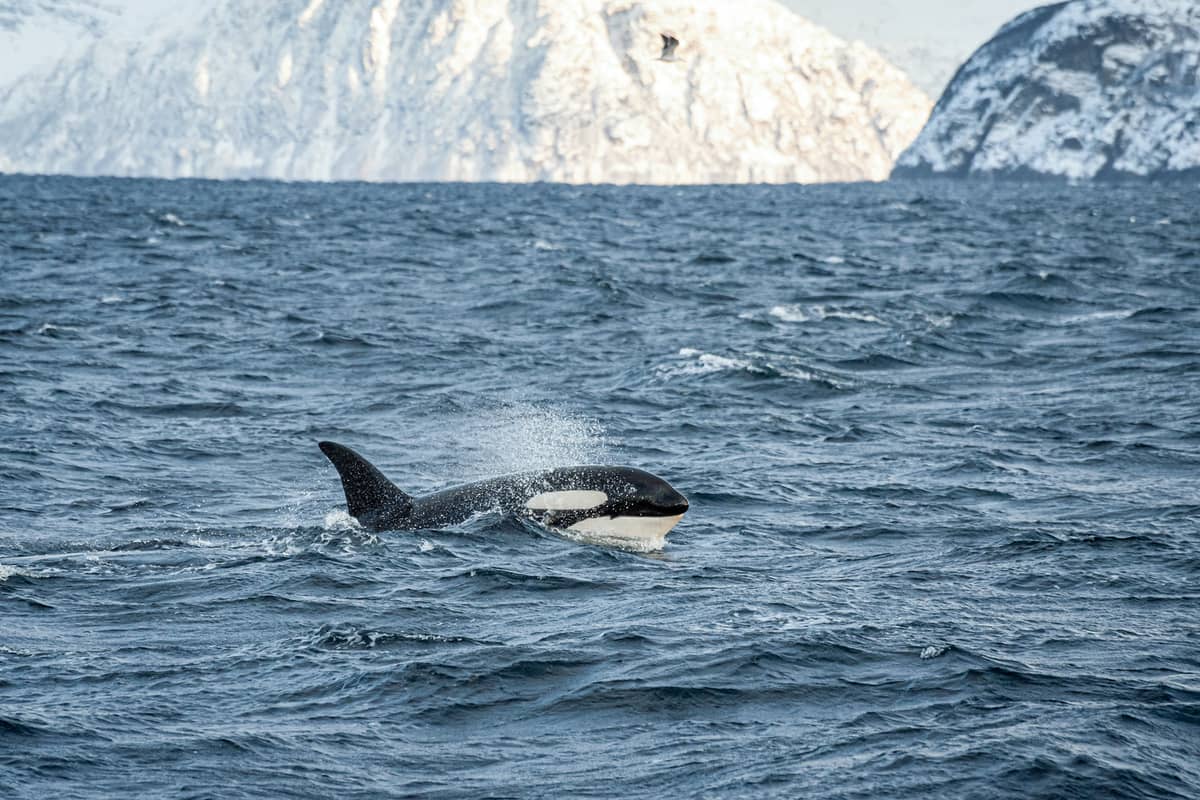
Orcas are toothed whales and the largest members of the dolphin family. Despite their black-and-white coloring and their tall dorsal fin, they are the stars of every trip. Males grow to around nine meters, females up to eight meters.3 Especially striking in males is the dorsal fin, which rises vertically from the water like a sword.
Orcas live and hunt in family groups. That is why you rarely see a single orca off Tromsø, but usually several animals swimming close together and surfacing in unison. The smaller, sickle-shaped fins belong to females and young animals. When a group passes by, it is worth staying quiet and not keeping the camera at your eye constantly.
When hunting, orcas display a behavior you will not experience anywhere else. They drive the herring into tight balls just below the surface. Several animals swim in circles around the school, keeping it together with powerful tail slaps and bubbles.7 This technique is called carousel feeding, and with a bit of luck you will see the commotion on the water surface.
Profiles
The whale species off Tromsø compared
| Type | Length | Identifying marks | How often |
|---|---|---|---|
| Orca | Males around 9 m, females up to 8 m3 | Tall, black dorsal fin | Common in season |
| Humpback whale | 15 to 17 m4 | Long pectoral fins, tail flukes when diving | Common in season |
| Fin whale | Second-largest whale species8 | Long back, tall, narrow blow | Rarely |
| Sperm whale | Large, angular head | Angled blow | Rarely |
Lengths according to the sources cited; which species you see depends on the day, there is no guarantee.
Three species
Orca, humpback whale, or fin whale?
Main species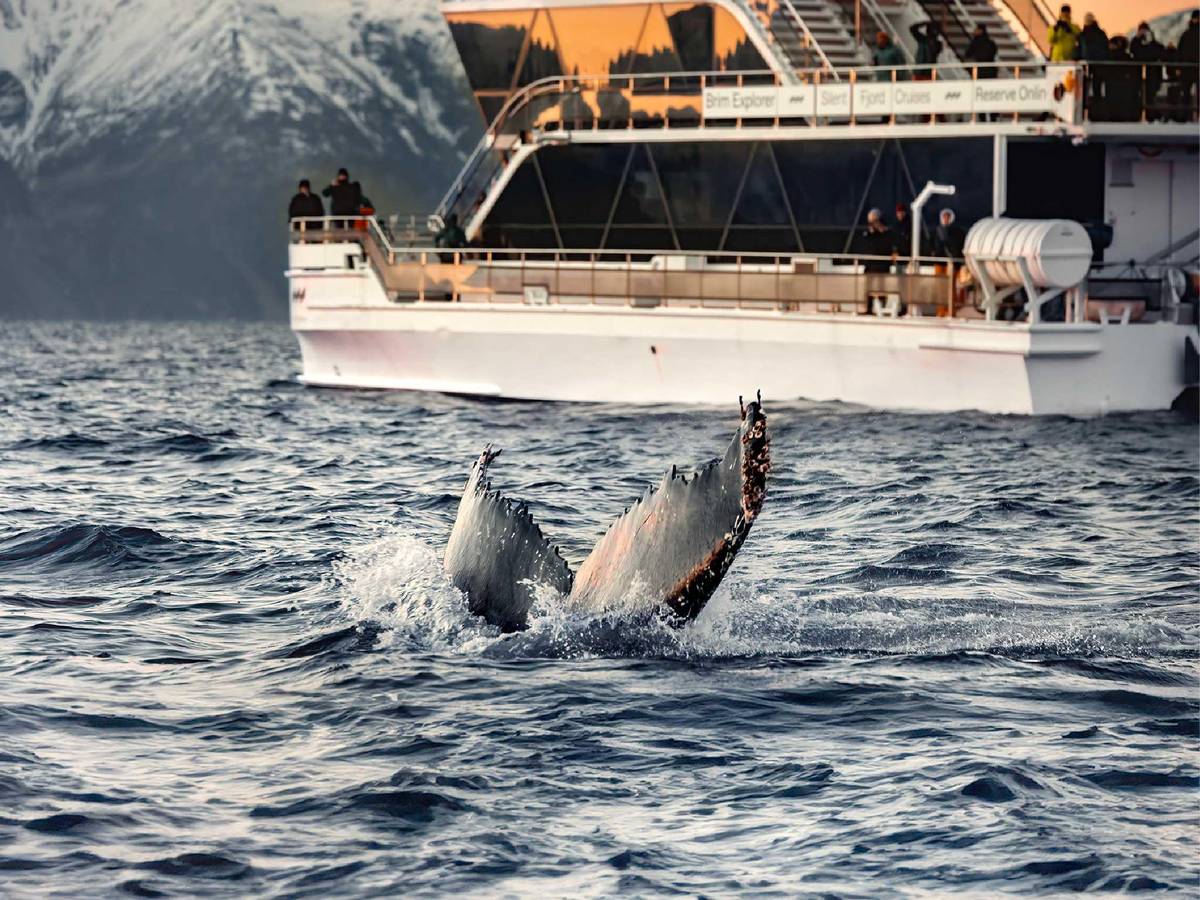 Main species
 Moment of luck
Fin whale
Fast and sleek
- Rank
- second-largest species
- Typical
- long back
- Blow
- high and narrow
Decision helper
What would you most like to see?
Plan your trip around your favorite animal.
In the middle of the season
The whales feed on herring in the region in winter.1
Choose a quiet boat
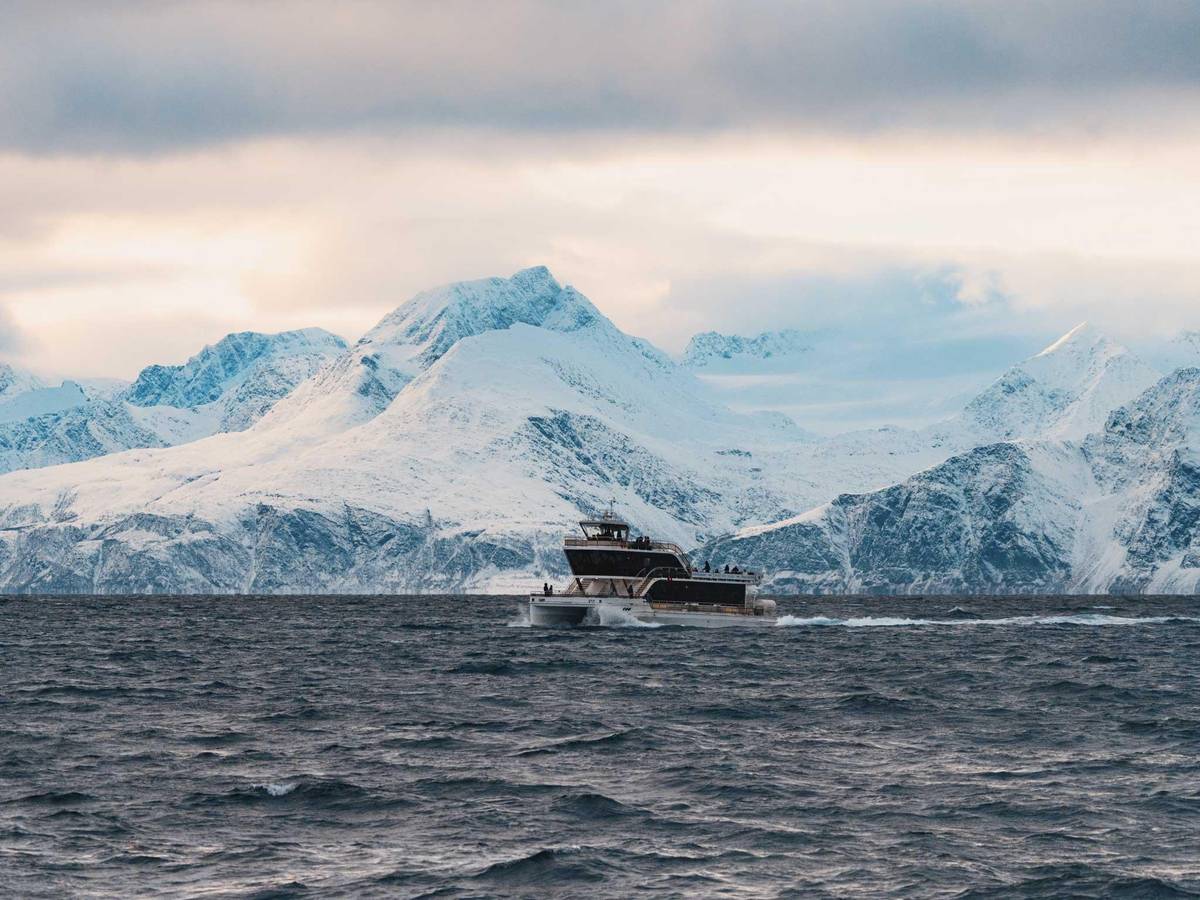
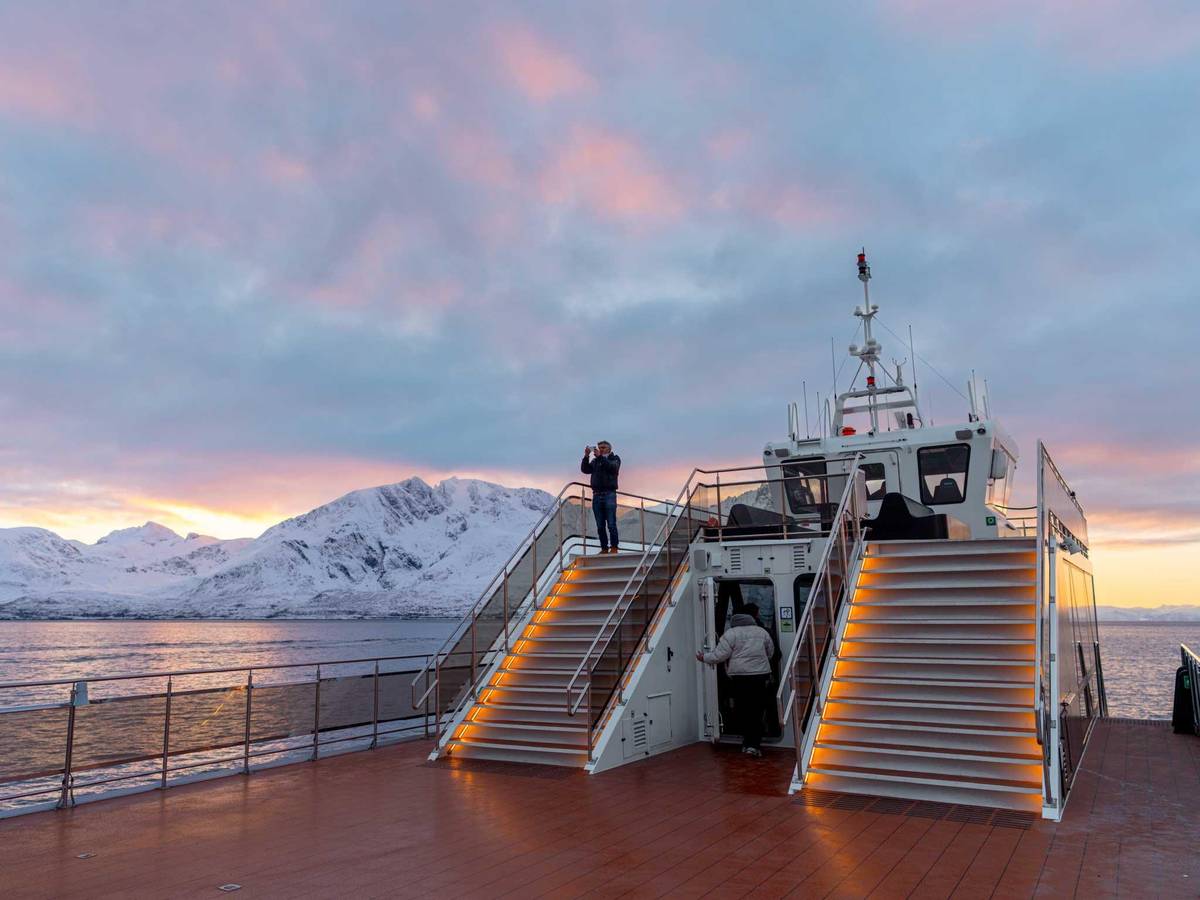
The boat on this page approaches the whales electrically and quietly.9
Plan for a long day
On some trips you can see orcas, humpback whales, fin whales, and sperm whales.2
Spend time on deck
Guided tours in the region also look out for bald eagles, seals, and seabirds.10
Pilot whales drive schools of herring close to the surface along the Norwegian coast into tight bait balls. Several pilot whales swim in a carousel and scare the herring together with powerful tail slaps and air bubbles.
Humpback whales in Norway: the giants with the long fins
Humpback whales in Norway are an experience many travelers never forget. The animals reach a length of 15 to 17 meters.4 They are therefore significantly larger than orcas, but move remarkably calmly. The long, light pectoral fins and the small hump in front of the dorsal fin, which gives the whale its name, are typical features.
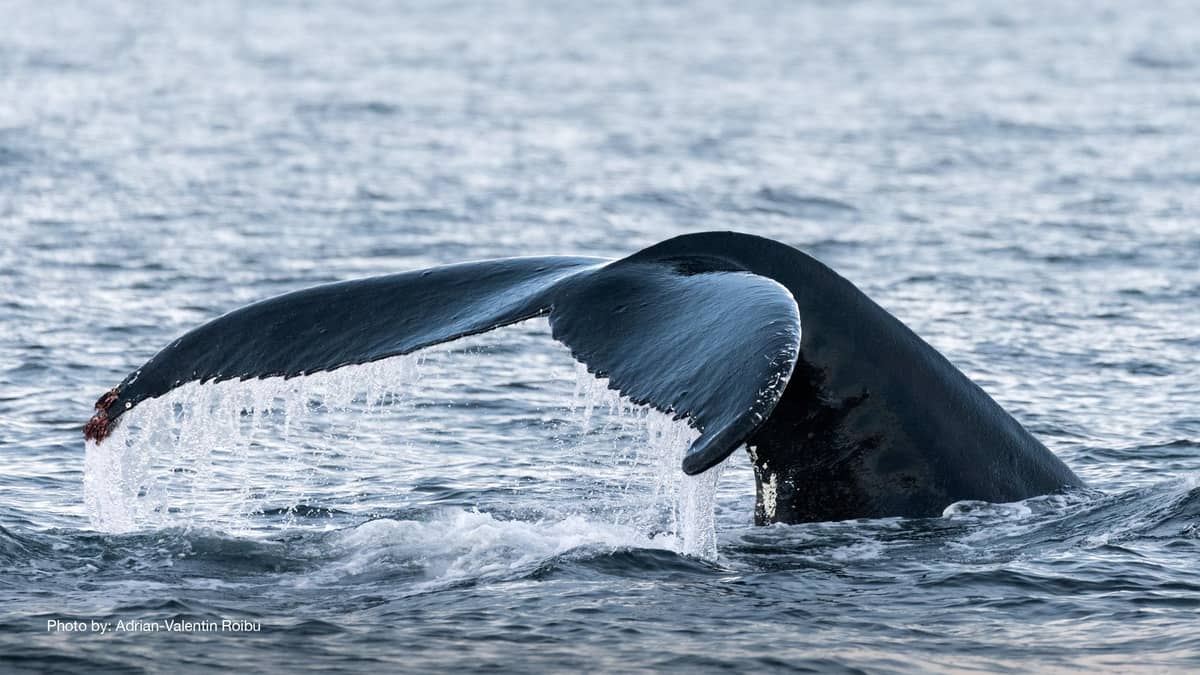
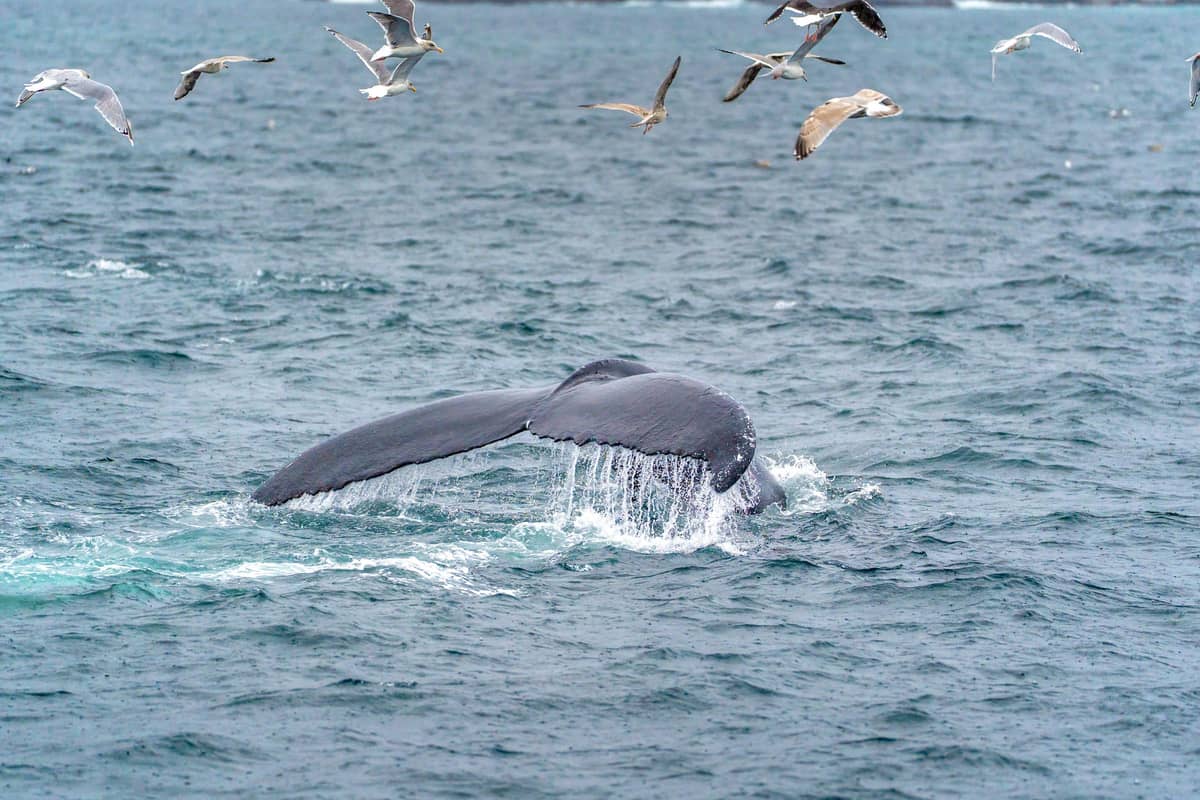
When diving, the humpback whale often lifts its tail fluke out of the water. The underside of this fluke is marked differently on every animal, like a fingerprint. Researchers use exactly this: since 2010, the North Norwegian humpback whale catalog has documented nearly 900 different animals in the region.11 If you take a good photo of the tail fluke, you will have an image of a very specific whale.
The humpback whales are only visitors in the north. In autumn they begin their migration south and have been stopping for extended periods along the coast of Troms and Nordland in recent years to feed on overwintering herring. In their breeding grounds, such as the Caribbean or West Africa, they barely eat at all.12 The fjords in the north are therefore a kind of gas station before the long journey.
Checklist
How to recognize the whales
01
What to look for
- The blow, the cloud of exhaled air
- The dorsal fin: tall in orcas, small in fin whales
- The humpback whale tail fluke when diving
02
What to bring
- Camera with zoom or smartphone for filming
- Warm gloves that let you operate them
- Binoculars for the quiet moments
Video
The Giants of the Sea: Humpback Whales and Orcas
The video only loads when you tap Play.
Fin whale and sperm whale: rarer but possible
Besides orcas and humpback whales, the boat operator on this page also lists fin whales and sperm whales as species you may see on a trip.2 Both are rarer than the two main species, and every sighting is a special treat. The guides on board usually identify the species by their blow long before you see the body.
The fin whale is the second-largest whale species on Earth and is found in all oceans.8 It is sleek, very fast, and when it surfaces it usually shows only a long back with a small fin far back. Its blow appears as a tall, narrow column. It rarely raises its tail fluke out of the water when diving.
You can recognize the sperm whale by its enormous, angular head and its angled blow directed forward. It dives very deep for squid and stays underwater for a long time. When it rests at the surface, it almost looks like a tree trunk before it raises its tail fluke and dives.
What else you will see
A whale watching trip is more than just searching for whales. In the Tromsø region, guided tours also take you to sea eagles, seals, and seabirds.10 Sea eagles are especially impressive when they circle over the fjord or sit on a rock. You sometimes see seals resting on skerries that the boat passes quietly.
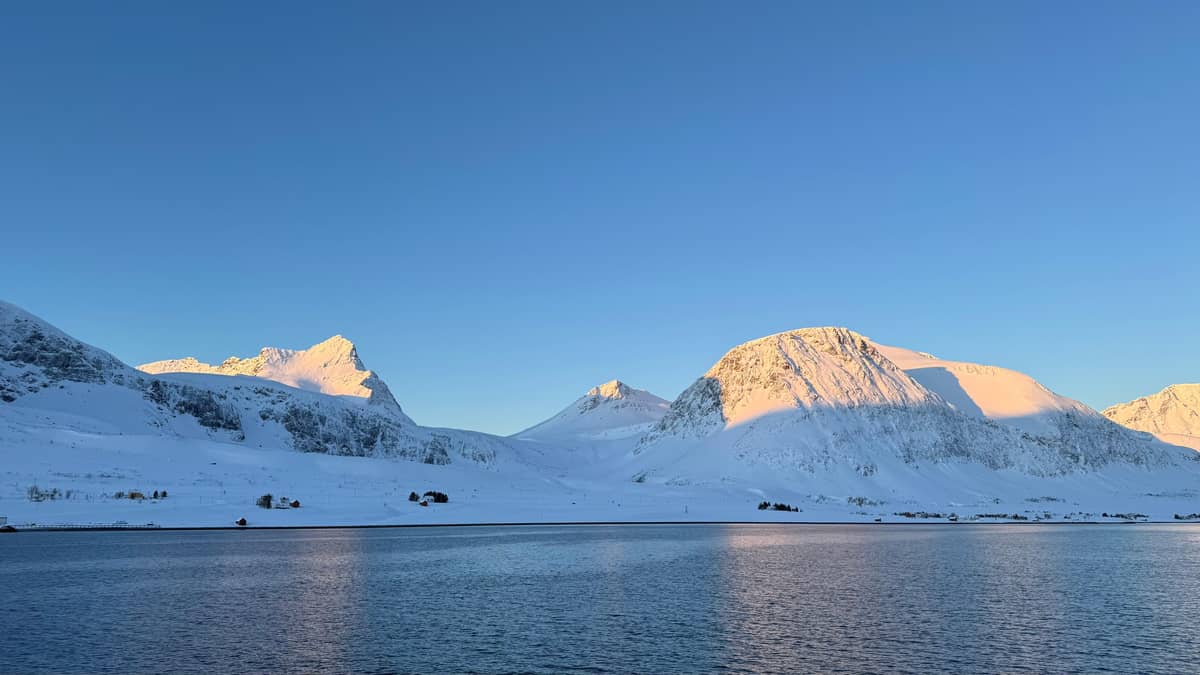
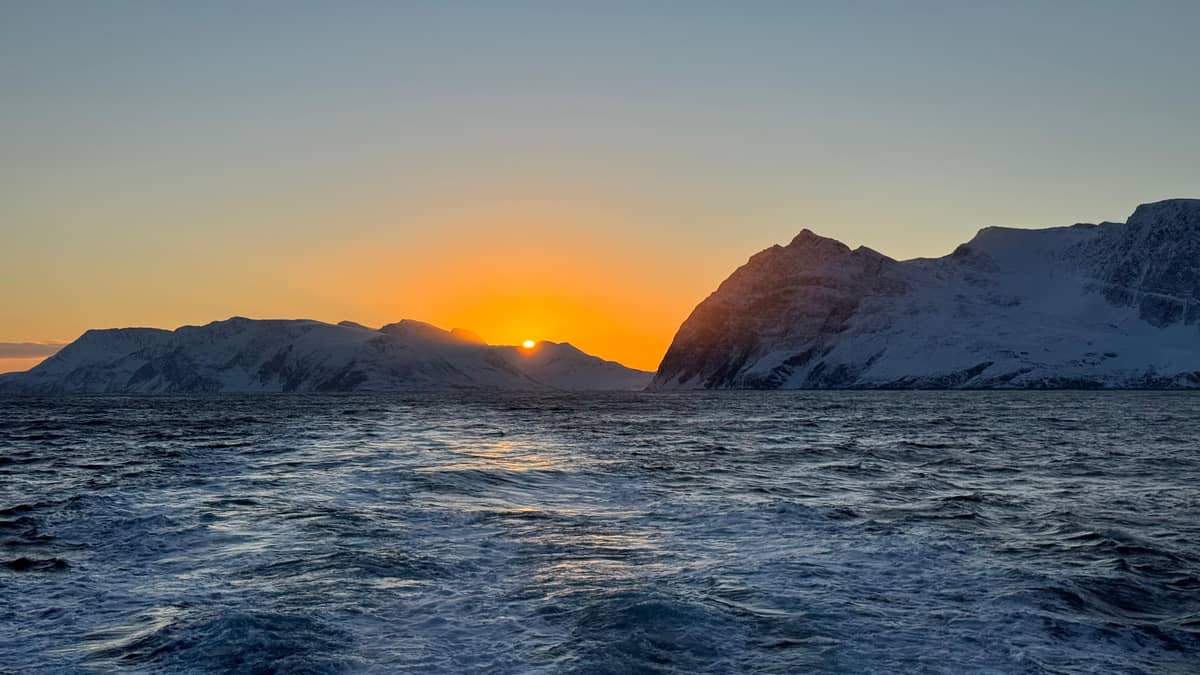
The landscape is part of the experience too. Heading north, the Lyngen Alps reveal themselves, a striking mountain region with high peaks and prominent glaciers.13 In winter light, when the sun barely or not at all rises above the horizon, the snow-covered peaks glow in blue and pink.
Therefore, do not plan every minute on deck with binoculars. Between sightings there are calm phases when you warm up inside and enjoy the landscape through the windows. As soon as the guides spot something, they let you know, and then movement on board starts up again.
How close may the boats get to the whales?
In Norway there are guidelines for whale watching. Boats should approach slowly, within 300 meters at less than 5 knots, at a steady speed, and from the side and slightly behind.6 This prevents startling the animals or disturbing them while they feed, keeping the encounter relaxed for everyone.
The boat on this page switches to its quiet electric motor near the whales. According to the operator, this reduces noise and vibrations so the observation remains calm and respectful.9 For you, this means a quiet experience on deck where you can sometimes even hear the whales blow.
Sometimes the whales themselves decide how close to come. Curious humpback whales or orcas occasionally swim right past the boat. Keep your hands on the railing and hold your camera steady, and enjoy the moment without rushing. Feeding, calling, or chasing a whale is strictly taboo.
Tips for spotting and photographing
First, watch for the blow, the cloud of breath and water that the whale releases when it surfaces. In cold winter weather it is especially visible. A tall, bushy blow indicates a humpback whale, an angled one a sperm whale. Orcas usually show only a small blow, but their distinctive dorsal fin makes up for it.
You do not need special equipment for photos, but a zoom lens helps. Set a short exposure time because the boat rocks, and winter light is scarce. With a smartphone it is best to film instead of taking individual shots and pick the best still frame later.
And finally: put the camera down once in a while. The most beautiful moments of a whale watching trip are often when a humpback whale breathes calmly right next to the boat and you simply watch. That memory stays with you, even if the photo turned out blurry.
Book the tour
A humpback whale may already be waiting in the fjord near Skjervøy.
Reserve your spot, pay later, cancel free of charge up to 24 hours before departure.


You ask,we answer.
Are there really orcas in Tromsø?
Yes, in winter. Orcas and humpback whales come into the region in winter to feed on herring.1
How large do orcas get?
Males around nine meters. Females grow up to eight meters long.3
How large is a humpback whale?
15 to 17 meters. That makes it significantly longer than a male orca.43
Which other whales can you see?
Fin whales and sperm whales with some luck. The boat operator on this page lists orcas, humpback whales, fin whales, and sperm whales.2
How do orcas hunt herring?
In a carousel. They drive the herring into tight balls and keep them together with tail slaps and air bubbles.7
Does the boat disturb the whales?
There are firm rules. Within 300 meters, boats travel slower than 5 knots and approach from the side.6
Where do humpback whales migrate?
To the Caribbean or to West Africa. That is where their mating grounds are, where they barely feed.12
Sources
Where the information comes from
- 1Visit TromsøWhale Watching in the Tromsø Region↩
- 2↩
- 3Institute of Marine ResearchKiller whale↩
- 4Institute of Marine ResearchHumpback whale | Institute of Marine Research↩
- 5Visit TromsøWhale Watching in the Tromsø Region↩
- 6Visit TromsøGuidelines for whale watching in Tromsø↩
- 7Institute of Marine ResearchKiller whale↩
- 8NOAA FisheriesFin Whale↩
- 9↩
- 10Visit TromsøArctic wildlife in Tromsø↩
- 11UiT The Arctic University of NorwayAbout the Project↩
- 12UiT The Arctic University of NorwayMigration↩
- 13Visit LyngenfjordLyngen Alps - a world-class nature paradise↩
Read more